

.png)
.png)
If you're running a Shopify brand, managing supplier relationships effectively can make or break your business. Poor supplier performance leads to overstock vs. stockouts, and lost revenue. But strong partnerships can help you reduce costs, improve delivery times, and scale operations without chaos. Here's how to build and maintain those relationships:
- Evaluate Suppliers: Use scorecards to measure performance (e.g., delivery timeliness, quality, cost).
- Segment by Priority: Categorize suppliers (e.g., critical vs. routine) to focus resources where they matter most.
- Formalize Agreements: Contracts and SLAs set clear expectations for lead times, quality, and payment terms.
- Use Technology: Tools like Forstock automate purchasing, track performance, and improve communication.
- Diversify Suppliers: Avoid over-reliance on one vendor to reduce risks like delays or shortages.
- Track KPIs: Monitor metrics like OTIF (98% target) and defect rates to ensure reliability.
- Communicate Regularly: Share forecasts and maintain open communication to prevent issues. Using AI inventory forecasting can further improve accuracy and prevent stockouts.

7-Step Framework for Scaling Shopify Supplier Relationships
How to Scale a Consumer Brand: Inventory, Supplier & Growth Strategies | Chris Meade (Crossnet)
Evaluating Your Current Suppliers
Taking a closer look at how your suppliers perform is crucial for building stronger partnerships. Did you know that 87% of procurement professionals now place managing supplier risk at the top of their priority list? Supply chain disruptions can be devastating, potentially cutting into as much as 62% of a company’s profits. To get ahead of these risks, the first step is to develop a structured way to evaluate supplier performance across the board.
Building Supplier Scorecards
Supplier scorecards are a game-changer. They take what might otherwise feel like subjective opinions and turn them into clear, measurable data. Instead of relying on gut feelings or vague assessments, you can focus on specific metrics that align with your business goals. Aim to track 5–10 key performance indicators (KPIs) to keep things manageable. Common categories include delivery timeliness, order accuracy, product quality, and cost efficiency.
To make your scorecard even more effective, assign percentage weights to each KPI based on what’s most important to your business. For instance, delivery speed might take up 40% of the score for perishable goods, while product quality might carry more weight for industries like fashion. Then, rate each metric on a simple 1–5 scale. This setup makes it easy to compare suppliers and spot trends over time.
Here’s an example of what a basic scorecard might look like:
| Supplier Name | KPI Category | Weighting | Score (1–5) | Comments |
|---|---|---|---|---|
| Supplier A | Product Quality | 40% | 4 | Minor defect issues in Q3 |
| Supplier A | Delivery Timeliness | 30% | 5 | Consistently meets 2-day window |
| Supplier A | Cost Efficiency | 20% | 3 | Competitive but no volume discounts |
| Supplier A | Communication | 10% | 4 | Responsive to technical inquiries |
Top-performing suppliers often maintain an on-time shipment rate of at least 98% and an on-time, in-full (OTIF) delivery rate of 97%. These benchmarks provide clear targets to aim for. Additional metrics like Perfect Order Rate (orders that arrive on time, complete, and undamaged) and Defect Rate (measured in parts per million) can help you get a more complete picture of reliability.
It’s also important to set a regular review schedule based on how critical a supplier is to your operations. For key suppliers, monthly or quarterly reviews make sense, while lower-risk partners might only need annual evaluations. Sharing your scorecard process during onboarding helps set expectations and turns the tool into a collaborative resource rather than just a performance report.
Once you’ve gathered the data, the next step is to dig into any recurring performance issues.
Finding Performance Problems
Your scorecard data can reveal patterns that might otherwise go unnoticed. For example, a high rate of product returns often points to manufacturing or quality control problems. Similarly, frequent delivery delays can hurt your OTIF performance, disrupt inventory planning, and even lead to stockouts.
Another red flag to watch for is landed-cost variance - when the actual total cost of receiving goods is higher than the quoted price. You can forecast inventory costs to better anticipate these fluctuations. A supplier might initially seem cost-effective, but hidden costs like high defect rates or frequent returns can eat into your margins. Slow communication is another issue. If a supplier takes longer than 24 hours to respond to inquiries or resolve problems, it can increase operational risk.
When you identify underperformance, use the data as a starting point for a constructive conversation instead of immediately ending the relationship. A Corrective Action Plan (CAP) can help address specific gaps and establish timelines for improvement. For strategic suppliers, consider creating a Joint Business Plan (JBP). This is a short agreement that lays out annual volume forecasts, cost-reduction goals, and shared KPIs. Taking this collaborative approach can often turn a struggling supplier into a valuable long-term partner.
However, if a supplier’s performance score falls below 3 out of 5, it’s time to escalate the issue. This might involve activating a backup supplier for added capacity, implementing a formal improvement plan, or even starting the search for a replacement. Addressing problems early gives you the chance to resolve them through collaboration rather than crisis management.
Categorizing Suppliers by Priority
Not all suppliers require the same level of attention. For example, a specialized fragrance house might need close, hands-on management, while routine vendors don’t demand as much oversight. Breaking suppliers into priority tiers helps you direct your resources where they’ll have the greatest impact. This approach allows you to customize your management strategies based on the importance of each supplier.
A useful tool for this is the Kraljic Matrix, which classifies suppliers into four categories based on their profit impact and supply risk:
- Strategic suppliers: High impact, high risk. These are critical to your business, like an exclusive organic fabric mill that defines your brand identity.
- Leverage suppliers: High impact, low risk. These might include suppliers for bulk materials, where competitive bidding can keep costs down.
- Bottleneck suppliers: Low impact, high risk. For example, a supplier with few alternatives but limited influence on your overall operations.
- Non-critical suppliers: Low impact, low risk. Think of vendors providing routine items like packaging tape or office supplies.
How to Segment Your Suppliers
To begin, conduct a spend analysis. Often, 80% of your spending is concentrated on just 20% of your suppliers. Once you’ve identified where your money is going, consider factors like strategic importance, reliability, and risk. While high-spend suppliers naturally draw attention, don’t overlook smaller suppliers who may be essential for key products that define your brand.
Reliability is another key factor. Use metrics like on-time delivery rates, defect occurrences, and response times to assess performance. Financial stability is equally important - credit reports or financial statements can provide insights. Also, consider geographic risks. This is especially complex when managing inventory across multiple warehouses. Suppliers in politically unstable regions or those representing single-source dependencies carry higher risks. ESG (Environmental, Social, and Governance) compliance is becoming increasingly important, as businesses aim to avoid contractual or reputational risks.
Once suppliers are categorized, tailor your management approach accordingly. For strategic suppliers, prioritize collaboration. Schedule regular reviews, share real-time sales data, and even host annual in-person summits. Developing a Joint Business Plan (JBP) - a one-page document outlining volume forecasts, cost-saving goals, and shared KPIs - can strengthen these partnerships. As Nicholas Fiorentino, owner of The Meatery, points out:
Maintaining an excellent relationship with our suppliers is critical to our business. I'm sure you've read there are beef shortages. We've never felt a moment of that, and I cannot help but credit it to the relationships we've built.
For non-critical suppliers, automation is key. Streamline tasks like purchase orders and invoices to minimize oversight, freeing up time for more impactful relationships. Revisit your supplier segments quarterly or after major changes in demand. This ensures you can identify “rising stars” that might need to be elevated to a higher-priority tier.
Setting Up Contracts and Service Agreements
Once you've categorized your suppliers, it's time to solidify expectations with formal contracts and Service Level Agreements (SLAs). Relying on informal or verbal agreements can lead to costly errors and erode customer trust. By using the insights from your supplier scorecards, you can formalize expectations and ensure everyone is on the same page.
Contracts are critical for defining key expectations like delivery timelines, quality benchmarks, and protocols for addressing issues. As Nick Huber, Founder of The Sweaty Startup, aptly states:
Miscommunications lead to misunderstandings, which lead to lost money and conflict. As a business owner, your job is to be understood.
Documenting agreements in writing ensures clarity and accountability for all parties.
For high-priority suppliers, SLAs should include specific performance metrics. For instance, setting an On-Time-In-Full (OTIF) target of 98% helps ensure timely deliveries. This is essential since 21% of shoppers abandon their carts if delivery times seem too slow. Supplier performance directly influences your ability to meet customer expectations.
What to Include in Supplier Contracts
A well-drafted supplier contract should include several key elements:
- Lead Times: Specify the time frame from order placement to delivery. This helps you avoid stockouts and maintain smooth Shopify inventory management.
- Payment Terms: Clearly outline when invoices are due (e.g., Net 30). This not only protects your cash flow but also fosters trust with suppliers. Nicholas Fiorentino of The Meatery refers to this as "relationship currency".
- Quality Standards: Define acceptable defect rates and product specifications to safeguard your brand's reputation and minimize returns.
- Minimum Order Quantities (MOQs): Establish the smallest quantity you must order. This impacts storage costs and reduces waste.
- OTIF Targets: Include specific delivery performance goals, which are crucial for meeting customer shipping deadlines.
- Termination Clauses: Outline the conditions under which the partnership can be ended, providing a clear exit strategy if performance falls short.
For strategic suppliers, you might also consider adding a Joint Business Plan (JBP). This one-page document can summarize annual volume forecasts, cost-saving objectives, and shared environmental, social, and governance (ESG) goals .
Here's an example of what these elements might look like in a contract:
| Contract Element | What It Covers | Why It Matters |
|---|---|---|
| Lead Times | Time from order placement to delivery | Prevents stockouts and ensures customer demand is met |
| Payment Terms | When invoices are due (e.g., Net 30) | Maintains healthy cash flow and strengthens trust |
| Quality Standards | Acceptable defect rates and product specs | Protects brand reputation and reduces returns |
| MOQs | Minimum units required per order | Impacts storage costs and inventory waste |
| OTIF Targets | On-Time-In-Full delivery percentage | Ensures timely customer shipments |
| Termination Clause | Conditions for ending the partnership | Provides an exit if performance is inadequate |
Additionally, consider including ESG compliance clauses where applicable. New regulations, such as the Corporate Sustainability Reporting Directive (CSRD) and Corporate Sustainability Due Diligence Directive (CSDDD), require companies to actively monitor supplier practices. Non-compliance could lead to fines or shipment delays.
How to Negotiate Better Terms
Once contracts are in place, negotiating better terms becomes the next priority. The focus should be on creating value rather than simply cutting costs. Nicholas Fiorentino emphasizes:
It is OK to not get the lowest price in exchange for having the best mutually beneficial relationship.
Strong supplier relationships can often outweigh minor cost savings, especially during times of supply chain disruptions.
One effective strategy is leveraging volume commitments. As Sam Naparstek, CEO of Rocco, explains:
As your quantities go up, you get access to a different level of manufacturer.
By projecting growth and committing to larger order volumes, you may convince suppliers to lower MOQs, extend payment terms, or offer better pricing. For example, Fishwife CEO Becca Millstein scaled operations in 2024 by collaborating with U.S.-based micro-canneries. This partnership helped the canneries invest in new machinery, allowing Fishwife to bypass a 200,000-unit MOQ while securing the needed production capacity.
Timing also plays a key role in negotiations. Suppliers may be more inclined to offer discounts at the end of their fiscal quarter or year to meet sales targets. Instead of negotiating each item separately, try bundling requests - combining related products or services can lead to better overall deals and streamline vendor relationships.
Always formalize negotiated terms in writing. Verbal agreements can lead to disputes, so ensure all prices, conditions, and promises are documented in the contract. Before entering negotiations, establish a clear "walk away" point - your bottom line. Having a backup supplier or alternative sourcing plan gives you the leverage to reject unfavorable terms.
Lastly, implement 3-way matching to verify that Purchase Orders, Goods Received, and invoices align. This step ensures accuracy, prevents overpayments, and holds both parties accountable to the agreed terms.
Improving Communication with Suppliers
Having strong contracts is a great starting point, but keeping the lines of communication open is what ensures those agreements actually work in practice. Regular, transparent communication turns contracts into partnerships that thrive. Without it, even the most well-drafted contracts can falter when unexpected challenges arise. Open dialogue fosters trust and allows both parties to tackle issues early - before they snowball into expensive problems. When suppliers have a clear understanding of your business goals, and you’re aware of their limitations, collaboration becomes more efficient and productive. This ongoing exchange complements the metrics and agreements already in place, making it easier to address performance concerns quickly.
Setting Up Communication Systems
Start by designating a single point of contact for each supplier. This creates accountability and avoids the confusion that can come from having multiple team members involved in the same relationship. A RACI matrix can also help clarify roles by outlining who is Responsible, Accountable, Consulted, and Informed for each supplier process - ensuring there’s no ambiguity about responsibilities.
Establish a regular meeting cadence by scheduling operational check-ins and performance reviews. Don’t wait until something goes wrong or you’re placing a last-minute order to touch base. For key suppliers, you might even develop a Joint Business Plan to align on shared long-term goals.
Another crucial step is to share demand forecasts in advance. Giving suppliers insight into upcoming promotions or seasonal demand spikes allows them to plan inventory accordingly, reducing lead times and avoiding stockouts. While manual processes can slow things down, leveraging the right technology can make these interactions more seamless.
Using Tools to Centralize Supplier Communication
Relying on manual methods often leads to miscommunications and operational hiccups. Centralized tools offer real-time visibility, helping suppliers flag potential issues - like inventory shortages - before they disrupt your operations.
Take Forstock, for example. This platform integrates directly with Shopify, offering a single dashboard to manage orders, contacts, and performance metrics. Forstock also automates inventory updates and demand forecasts, ensuring suppliers have access to the same data you’re working with.
One standout feature is its automated purchase order creation, which eliminates the need for constant follow-ups and reduces the risk of human error. When inventory levels hit a reorder point, Forstock generates purchase orders based on lead times and sales trends. This keeps suppliers informed about upcoming orders without requiring endless back-and-forth communication. By sharing real-time data, suppliers can better plan their production schedules and pre-position materials, which ultimately reduces lead times and improves order fulfillment rates.
A real-world example of this approach in action comes from Cozy Earth, a luxury bedding brand. In 2022, the company onboarded 60 partners onto a centralized platform to enhance reporting and communication. By optimizing these supplier relationships and maintaining consistent communication, Cozy Earth achieved 109% year-over-year program growth and a 912:1 return on investment. This success highlights how the right tools not only streamline workflows but also make a measurable impact on profitability.
sbb-itb-f0fc809
Tracking Supplier Performance with KPIs
Once you've established clear communication channels with suppliers, the next step is to measure their performance. Using specific metrics takes the guesswork out of evaluating relationships and provides concrete data to guide your decisions.
Choosing the Right KPIs
To assess service and reliability, focus on metrics like OTIF (On-Time, In-Full), with a target of 98% or higher, along with the fill rate and perfect order rate. These indicators ensure smooth, error-free transactions from the moment an order is placed to its final delivery.
Quality and cost are equally important. Keep an eye on defect rates - the percentage of items that arrive damaged or unusable - and landed-cost variance, which can reveal hidden fees that might erode your profit margins. For inventory management, metrics like inventory turnover (calculated as the cost of goods sold divided by average inventory) and the sell-through rate help you understand how efficiently products are moving.
Cycle time metrics are also critical. Customer order cycle time measures the duration from order placement to receipt, while supply chain cycle time tracks the total time needed for delivery when no inventory is available. These numbers matter - 21% of shoppers will abandon their carts if delivery times are too slow. To set meaningful benchmarks, rely on historical data and compare performance over time instead of viewing metrics in isolation.
After defining your KPIs, the next challenge is figuring out how to track them effectively.
Automated vs. Manual Performance Tracking
Manually tracking supplier performance with spreadsheets can be time-consuming and prone to errors. Automated systems, like Forstock, change the game by offering real-time data and alerts when performance falls below set benchmarks.
| Feature | Manual Tracking (Spreadsheets) | Automated Tracking (Forstock) |
|---|---|---|
| Data Accuracy | High risk of errors and discrepancies | Real-time synchronization across all channels |
| Time Investment | 4–5 hours daily on admin tasks | 1–2 hours daily, allowing more focus on strategy |
| Responsiveness | Reactive; issues discovered after sales impact | Proactive; alerts for low stock and reorder points |
| Visibility | Manual updates required for reports | Real-time dashboards with drill-down options |
Forstock integrates seamlessly with Shopify, automatically pulling transaction data and eliminating the need for manual data entry. It tracks metrics like supplier lead times, order accuracy, and delivery performance in a centralized dashboard. This allows you to identify and address issues before they escalate. For example, if a supplier's on-time delivery rate drops below your threshold - say, 95% - Forstock can send an alert, giving you time to act before stockouts occur. This proactive approach is a key factor in scaling operations smoothly, rather than constantly firefighting inventory problems.
Take Bala, a fitness brand, as an example. In June 2025, they used Shopify Collective to launch "The Movement Store", relying on eight partner brands as on-demand suppliers. By syncing select SKUs in less than 24 hours through automated tracking, they achieved 45% of sales from new customers. Similarly, Coast Flight Training adopted automated procurement across its California and Texas locations, cutting processing times by 50% - from seven days to just two or three - while gaining complete visibility into spending. These cases highlight how automation not only saves time but also strengthens supplier relationships without increasing headcount.
Using Technology to Scale Supplier Operations
As your Shopify brand grows, relying on spreadsheets becomes impractical. These outdated methods create blind spots that can lead to expensive mistakes. In fact, retailers worldwide lost an estimated $1.77 trillion in a single year due to stockouts and overstock situations. Technology steps in to eliminate guesswork by providing real-time data, enabling you to scale efficiently without increasing your team size.
By implementing a centralized data system, you can unify online sales, in-person transactions, and supplier performance into one streamlined platform. This eliminates the need for manual reconciliation and gives you instant visibility across all locations. With logistics costs eating up as much as 20% of ecommerce revenue, automation is no longer optional - it’s essential. It not only protects your margins but also helps you manage higher volumes effectively. This shift toward smarter technology lays the foundation for advanced supplier management solutions that improve overall operations.
How Forstock Improves Supplier Management
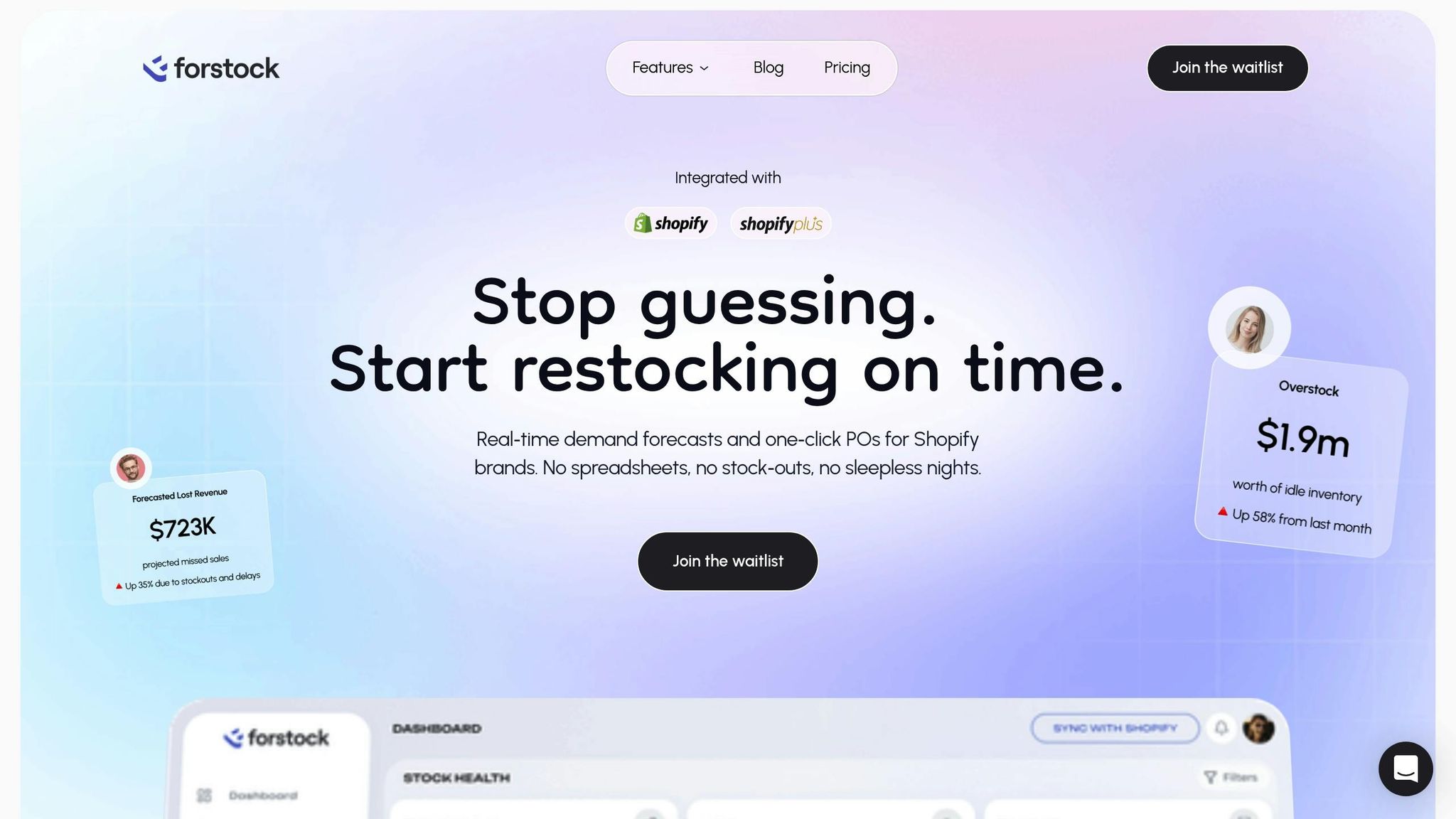
Forstock simplifies high-volume operations with tools like real-time demand forecasting, automated purchase orders (POs), and performance tracking. By analyzing historical sales data, lead times, and seasonal trends, the platform predicts future demand, allowing you to adjust stock levels ahead of busy periods. This proactive approach ensures you’re prepared for seasonal spikes without overstocking or running out of inventory.
Automated PO creation is another game-changer. Instead of manually vs. automated purchase orders being a choice you have to weigh, automation streamlines the process, Forstock generates POs automatically when stock levels hit pre-set reorder points. This seamless process not only saves time but can also boost gross margins by 25% or more by preventing stockouts and excess inventory.
For supplier management, Forstock offers automated scorecards to track key performance indicators (KPIs) like on-time-in-full (OTIF) rates, defect rates, and lead-time variability. A centralized dashboard provides a 12-month demand plan alongside supplier performance metrics, making it easy to spot and address potential issues before they affect your sales. With 92% of brands already using supplier scorecards to uphold performance standards, automating this process gives you a clear competitive edge.
And thanks to its seamless integration with Shopify, Forstock takes efficiency to the next level.
Connecting Forstock with Shopify

Forstock integrates effortlessly with Shopify, giving you a unified view of your entire operation. The platform automatically syncs transaction data from your Shopify store, providing accurate, real-time updates. This ensures you always have a single source of truth for inventory levels and supplier performance.
With this integration, you can manage stock levels, suppliers, and performance all from one dashboard. When a product sells on Shopify, Forstock instantly updates your inventory and adjusts demand forecasts. If stock drops below your reorder threshold, the system generates a purchase order and sends an alert - automatically. This real-time synchronization helps prevent overselling and ensures you’re always ready to meet customer demand. This is especially critical since 21% of shoppers abandon their carts if delivery times seem too slow.
Forstock also simplifies supplier communication. Instead of juggling emails, spreadsheets, and separate tracking systems, you can share real-time sales data and demand forecasts directly with suppliers through the platform. This level of transparency helps suppliers plan their production schedules more efficiently, reducing costly inventory errors and strengthening your supply chain.
Working with Multiple Suppliers
Once you've established clear scorecards and contracts, taking the step to diversify your supplier base can make your operations more resilient. Relying on just one supplier can leave you vulnerable to production hiccups, natural disasters, or capacity issues. Partnering with multiple suppliers helps safeguard your revenue and keeps your customers happy, especially in high-demand scenarios.
Why You Need Multiple Suppliers
Having multiple suppliers gives you a safety net. If one supplier faces delays or struggles with capacity, others can step in to ensure your supply chain keeps moving. This flexibility is especially important during busy seasons when a single supplier might not be able to handle larger orders. Spreading suppliers across different regions also minimizes the risk of disruptions caused by localized events like natural disasters or political unrest. Industry experts emphasize this approach:
"You never want to be exposed to just one country. Some people take that risk, but I'd rather not." - Sam Naparstek, CEO and Co-founder, Rocco
Another benefit of working with multiple suppliers is the competitive edge it creates. When suppliers know they’re not your only option, they’re more likely to improve their service and offer better pricing. This dynamic becomes even more valuable as your order volumes grow. While maintaining backup suppliers may come with slightly higher costs, it’s a small price to pay for ensuring consistent stock availability and protecting your revenue.
Building Lasting Supplier Partnerships
Strong supplier relationships don’t just happen - they’re built on trust, communication, and reliability. One of the simplest yet most impactful ways to nurture these relationships is to pay your suppliers on time, every time. This builds what industry insiders call "relationship currency", which can lead to perks like priority production, exclusive discounts, or even faster turnaround during tight supply situations.
"Not skipping a payment demonstrates your respect for them and your awareness of their requirements. If you accumulate enough relationship currency over time, you might be able to receive exclusive discounts." - Dean Lee, Head of Marketing, Sealions
Another way to strengthen partnerships is by sharing your demand forecasts and sales data. When suppliers have a clear picture of your growth plans, they can prepare in advance - adjusting production schedules or pre-positioning materials to cut your lead times. For your most critical suppliers, consider formalizing these plans into a Joint Business Plan that outlines forecasts and cost-reduction strategies.
Even when you’re not actively placing orders, stay in touch with your suppliers. Regular check-ins about sourcing, capacity, and potential challenges can help you spot issues early, before they disrupt your inventory. If problems persist, you'll need a structured approach to solve supplier performance issues before they impact your bottom line. These proactive practices lay the groundwork for supplier networks that can adapt and scale with your business needs.
Improving Supplier Relationships Over Time
Strengthening supplier relationships is an ongoing process, especially as your Shopify brand grows. What works when fulfilling 100 orders per month may not hold up when you’re handling 1,000. Regular audits and well-thought-out contingency plans can help ensure your supply chain remains flexible and reliable, even as market conditions change.
Running Regular Supplier Audits
Effective supplier management depends on consistent evaluation, and regular audits are a key part of that. These audits help you spot potential issues - like stockouts or quality problems - before they escalate. Focus your reviews on three main areas: operational metrics (e.g., on-time delivery and fulfillment accuracy), financial metrics (such as invoice accuracy and pricing), and compliance metrics (like adherence to regulations and ethical labor standards).
To streamline this process, segment your suppliers using the Kraljic Matrix. This allows you to prioritize audits for high-impact or high-risk suppliers. For instance, 92% of brands now use scorecards to ensure suppliers meet sustainability standards. Reassess and resegment suppliers quarterly or after periods of increased demand.
Instead of relying on static annual reviews, integrate real-time data into your audits. Integrating multi-supplier data can flag problems as they arise - whether it’s declining product quality or a trend of late shipments. Use audit findings to inform your contracts, adding clauses for penalties when suppliers underperform and incentives when they exceed expectations. For key suppliers, set improvement goals based on audit results.
A practical example: In 2025, smart fridge manufacturer Rocco identified noise control issues in their refrigerator fans through audit data. They switched to an electric vehicle fan supplier, which significantly boosted product quality.
Audits do more than uncover current challenges - they also provide the foundation for robust contingency planning.
Creating Backup Plans
In addition to regular monitoring, having backup plans in place is essential for maintaining supply chain stability. Disruptions are inevitable, yet only 49% of businesses globally have a documented continuity plan. For 90% of companies, just one hour of downtime can cost over $300,000. To prepare, identify critical functions (like payment processing or cloud inventory management) that must stay operational, and set clear triggers - such as prolonged supplier delays - that activate your backup plan.
Diversifying your supplier base is a proactive way to reduce risk. Pre-approve secondary manufacturers and maintain safety stock of essential components to absorb unexpected delays. For example, in 2025, fitness brand Bala used Shopify Collective to onboard eight backup suppliers within 24 hours. They synced SKUs without holding inventory upfront, securing 45% of sales from new customers while reducing inventory risks.
"Diversifying who your suppliers are is important, so if something goes wrong with one supplier, you have an opportunity to say, OK, they're running into trouble. You immediately flip to another supplier you've already vetted."
– Erin Chiang, Supply Chain Planning Lead, Shopify
Additionally, cross-train your team to handle vendor communications so no single point of contact becomes a bottleneck. Keep offline copies of your contingency plans, and develop manual workarounds to keep operations running if your primary systems go offline.
Conclusion
Managing supplier relationships effectively requires ongoing attention and a strategic approach. From using tools like scorecards to assess performance, to employing the Kraljic matrix for supplier segmentation, every step should align with your brand's growth. Clear contracts, open communication, and adaptability are the backbone of this process, with technology and data insights driving efficiency.
Technology simplifies and scales supplier management. Tools such as Forstock streamline repetitive tasks like customizing purchase orders and demand forecasting, freeing your team to focus on bigger-picture strategies. Features like real-time visibility and AI-powered forecasting help minimize lead times and prevent stockouts, ensuring smoother operations.
However, successful supplier relationships go beyond contracts and metrics. Building trust through consistent practices is essential. As Nicholas Fiorentino highlights:
Maintaining an excellent relationship with our suppliers is critical to our business. I'm sure you've read there are beef shortages. We've never felt a moment of that, and I cannot help but credit it to the relationships we've built.
Simple actions, like paying suppliers on time, can strengthen these relationships. Meeting suppliers face-to-face also adds a layer of trust that digital interactions often lack.
Finally, diversification and contingency planning are non-negotiable. Having pre-approved backup suppliers and maintaining safety stock can safeguard your business and maintain customer trust during unexpected disruptions.
FAQs
What’s the best way to evaluate my suppliers for improved performance?
To get the most out of your supplier relationships, keep an eye on a few essential metrics. Start with on-time delivery rates, order accuracy, lead times, and product quality - these give you a clear picture of how reliable your suppliers are and whether they’re meeting your operational expectations.
Don’t stop there. Take into account cost competitiveness, whether they stick to payment terms, and how quickly they respond to any issues that crop up. Regularly tracking and reviewing these factors can highlight improvement opportunities and help build stronger partnerships with your suppliers.
For an easier, more streamlined process, consider using tools like Forstock. With real-time insights into inventory levels, demand patterns, and supplier performance, you can make evaluations that are not just accurate but also aligned with your business goals. This data-driven approach can help fine-tune your supply chain and support your company’s growth.
How can using a platform like Forstock improve supplier management for Shopify brands?
Using a platform like Forstock can transform how Shopify brands manage their suppliers, especially those juggling high-volume operations. With AI-driven tools, Forstock automates critical tasks like demand forecasting and creating purchase orders. This means fewer stockouts, less overstock, and inventory levels that stay right where they need to be. The result? Time saved and costly mistakes avoided.
Forstock also simplifies supplier communication and performance tracking by bringing everything into one place. Its unified dashboard lets you monitor stock levels, delivery reliability, and demand plans across multiple locations. Plus, with real-time analytics and seamless Shopify integration, making data-driven decisions becomes second nature. These tools not only streamline supplier coordination but also help brands scale efficiently, improve accuracy, and keep their supply chain operations transparent - all while giving you more time to focus on growing your business.
Why should my Shopify brand work with multiple suppliers?
Working with several suppliers is a smart move for keeping your supply chain steady and adaptable. Relying on just one supplier can leave your business vulnerable to delays, stock shortages, or unexpected problems.
When you diversify your supplier network, you’re better positioned to maintain consistent inventory, negotiate more competitive pricing, and respond swiftly to shifts in demand. This strategy empowers your Shopify brand to deliver on customer expectations and scale with ease.


.png)
.png)
.png)
.svg)