

.png)
.png)
Running a Shopify store? Managing inventory efficiently is critical. Stockouts mean lost sales, and overstock locks up cash. Demand forecasting tools can help you predict customer needs, reduce inventory costs by 20–30%, and avoid disruptions. By 2025, 98% of companies use AI in supply chains to stay competitive.
Here are the top tools for demand forecasting:
- Forstock: AI-powered insights, automated purchase orders, and real-time inventory tracking. Starts at $39/month.
- Sumtracker: Synchronizes inventory across Shopify, Amazon, and eBay for demand-based forecasting.
- Inventory Planner by Sage: Customizable forecasts, multi-location insights, and overstock analysis for large-scale operations.
Each tool offers features like real-time tracking, AI-driven predictions, and automation, making inventory management easier and more precise.
Quick Tip: Choose a tool that fits your store size, product complexity, and budget. Start with a free trial to measure accuracy and ROI.
Shopify and Inventory Planner integration | Demand Forecast | Inventory Planning | eCommerce stock

sbb-itb-f0fc809
What to Look for in a Demand Forecasting Tool
Not all forecasting tools are created equal. The best ones provide real-time visibility, intelligent predictions, and automation to eliminate tedious manual tasks. Here's what you should prioritize when choosing a platform.
Real-Time Inventory Tracking
Accurate demand forecasting starts with up-to-the-minute data. A tool that syncs inventory across warehouses, retail stores, and third-party logistics providers ensures a unified view of your stock levels. This visibility helps prevent overselling during busy periods and keeps your online and physical store inventory aligned.
"Having all our tooling and commerce data unified in a single platform was a real driving factor. All our sales channels display the same stock availability." – Alexandra McNab, COO, Bared Footwear
With real-time tracking, sales data is instantly converted into precise reorder recommendations, unlike outdated manual counts. Retailers using unified inventory systems have reported up to a 40% increase in in-store conversion rates, thanks to accurate stock data and flexible fulfillment options.
Real-time data also lays the foundation for tools that use AI to forecast demand with a level of precision traditional methods can't match.
AI-Powered Forecasting Models
Traditional forecasting relies on historical data and periodic updates, but AI takes it to the next level. AI models continuously learn from incoming data and incorporate external factors like social media trends, weather patterns, and competitor pricing. This allows businesses to respond to unexpected spikes - like a TikTok trend - before they even appear in sales reports.
AI doesn’t just forecast at the category level; it dives deeper, predicting demand for specific SKUs, locations, and even daily intervals. It can account for details like size, color, or other attributes. According to a 2023 McKinsey survey, 25% of companies credited AI-driven demand planning for boosting their Earnings Before Interest and Taxes (EBIT) by more than 5%.
Automated Inventory Tasks
Automation ensures your demand forecasts lead to fast, accurate action. Manual reordering is time-consuming and prone to errors. The right tool can automate low-stock alerts and even generate draft purchase orders as soon as inventory hits the reorder point. Some platforms streamline this further with one-click approval for reorder quantities, simplifying the replenishment process.
Advanced systems also analyze supplier performance - factors like lead times and pricing - to help you negotiate better deals and choose reliable partners. By applying the formula (Average Lead Time × Average Daily Sales) + Safety Stock, you can set automated triggers that optimize inventory levels. Real-time inventory tools can save businesses over 10 hours a month by reducing manual data entry and minimizing the need for physical stock counts.
Top Demand Forecasting Tools for Shopify
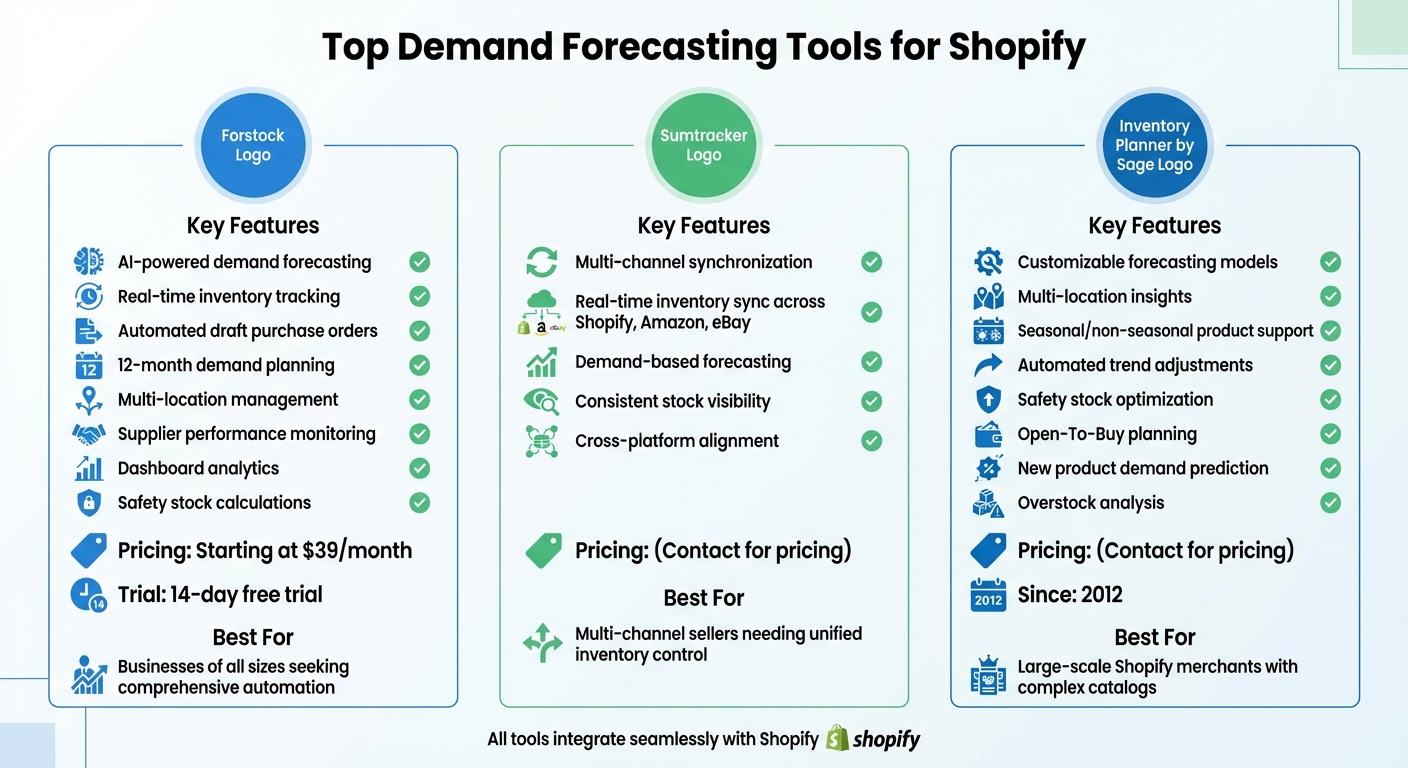
Top 3 Shopify Demand Forecasting Tools Comparison: Features and Pricing
Demand forecasting tools have revolutionized Shopify inventory management, helping merchants anticipate needs and avoid overstock. Below are three platforms that stand out for their ability to keep businesses ahead of demand.
Forstock

Forstock simplifies demand forecasting with real-time insights and automated draft purchase orders, all accessible from a single dashboard. This tool integrates seamlessly with Shopify, tracking stock levels and analyzing trends to create 12-month demand plans. It also manages inventory across multiple locations. Using AI-driven forecasting, it adjusts for factors like seasonality, lead times, and shifting sales patterns, enabling smarter, data-backed purchasing decisions without the need for manual calculations.
Its supplier management feature centralizes communication and monitors performance metrics such as lead times and pricing. The system automatically generates purchase orders when stock hits reorder points, helping businesses avoid stockouts and improve cash flow. Whether you're dealing with straightforward SKUs or complex multi-variant catalogs, Forstock ensures you maintain optimal stock levels while minimizing overstock risks.
Pricing starts at $39/month, catering to businesses of all sizes. Each plan includes features like dashboard analytics, reorder suggestions with safety stock calculations, purchase order tracking, and live-chat support. Plus, a 14-day free trial lets you explore the platform risk-free.
Sumtracker
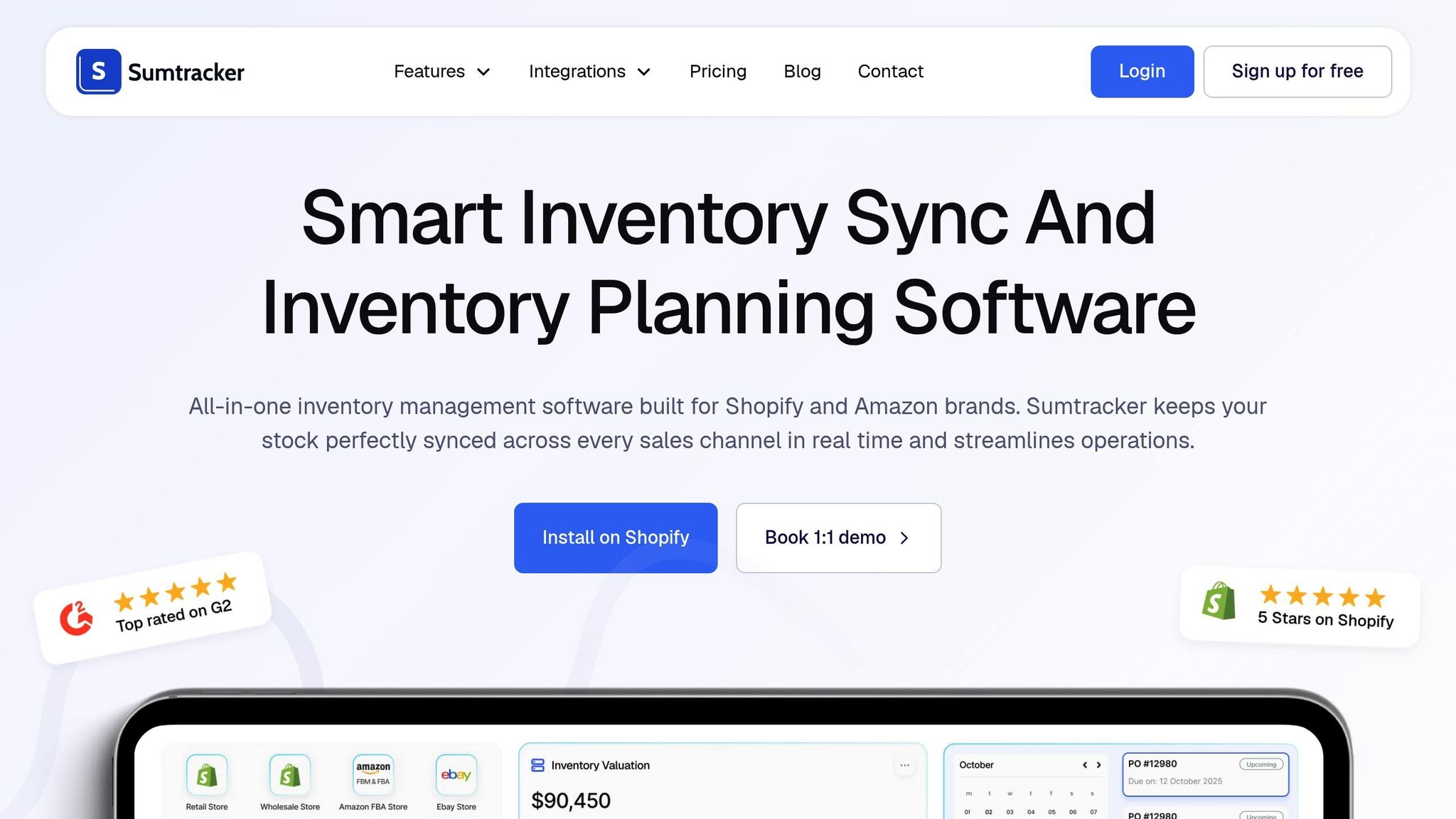
Sumtracker takes inventory control a step further by streamlining stock management across multiple sales channels. It synchronizes inventory levels in real time across Shopify, Amazon, eBay, and other platforms. This ensures consistent stock visibility and demand-based forecasting, making it easier to maintain alignment across all channels.
Inventory Planner by Sage
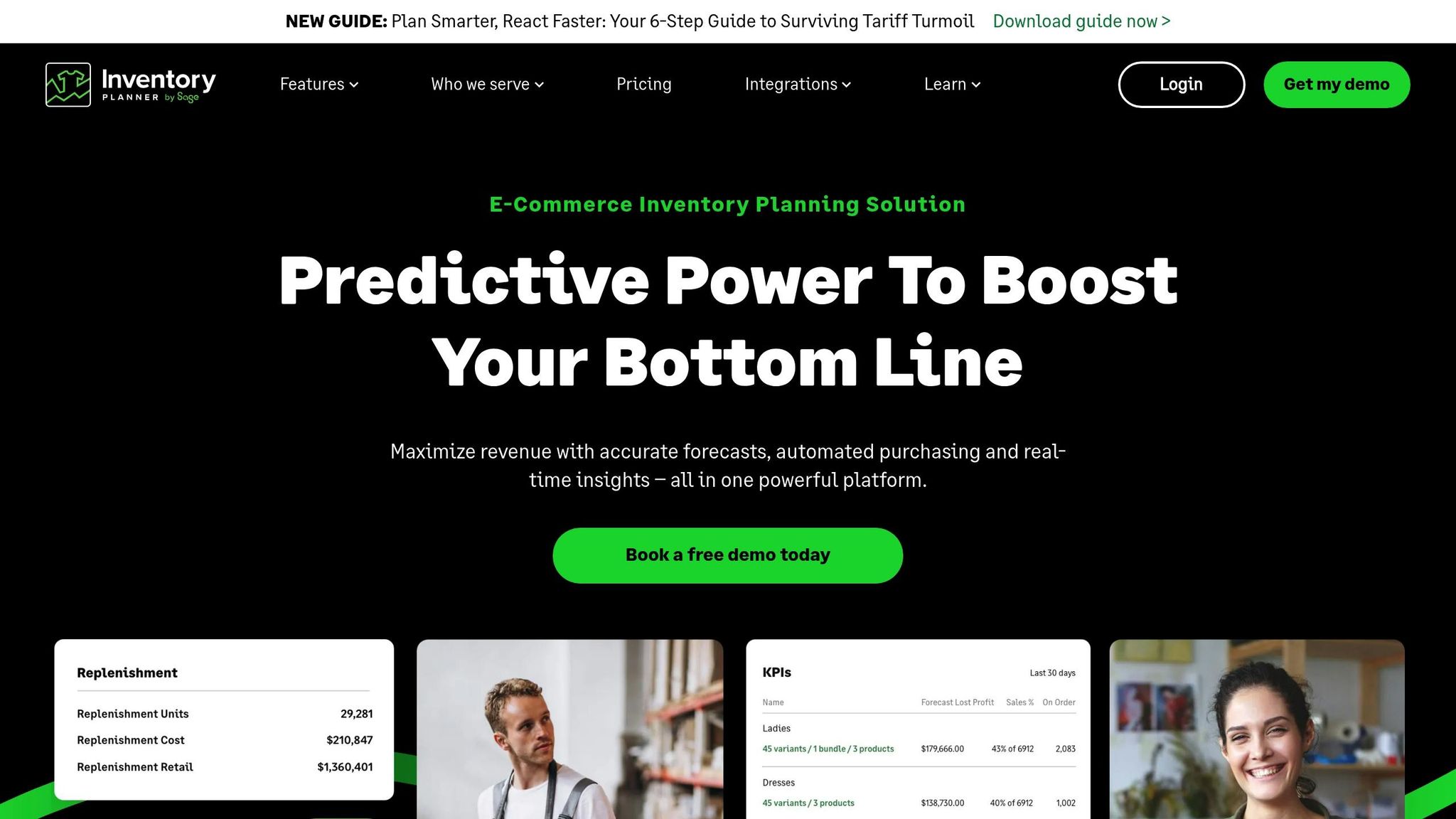
For merchants requiring detailed control, Inventory Planner by Sage delivers customizable forecasting with multi-location insights. Serving eCommerce businesses since 2012, this platform tailors its forecasting models to both seasonal and non-seasonal products. It offers automated trend adjustments and safety stock optimization, preventing excess cash from being tied up in slow-moving inventory. Features like Open-To-Buy planning and multi-location forecasting provide large-scale Shopify merchants with the precision they need.
One standout feature is its ability to predict demand for new products using data from similar SKUs, which is especially useful when historical data is limited. The platform also identifies overstock by tracking metrics like last sold date, overstock units, and associated costs, helping businesses avoid cash flow challenges.
How to Choose the Right Tool for Your Store
What to Consider When Choosing
Start by assessing your business's stage and the amount of data you handle. If your store is well-established, AI-powered tools can leverage your extensive sales history for accurate predictions. On the other hand, newer stores with limited data may need to focus on qualitative insights instead.
The complexity of your product catalog is another key factor. Stores with simple products and minimal variations might only require basic replenishment alerts. However, if you manage items like apparel with multiple sizes, colors, and styles, look for a tool that offers SKU-level forecasting instead of broad category estimates.
For stores earning less than $10,000 per month, it’s wise to start with free plans and upgrade as your revenue grows. Integration capabilities are also crucial. Your forecasting tool should seamlessly connect with systems like Shopify, your POS, and third-party logistics providers to ensure all your data is in one place.
Finally, consider how user-friendly the tool is before diving into its potential financial benefits.
Setup and Learning Curve
Choose a tool that matches your team’s skill set. Ideally, it should feature intuitive dashboards that make critical data easy to understand without requiring advanced technical expertise. A quick and straightforward setup process is essential - avoid tools that involve overly complicated configurations.
This simplicity is especially beneficial for smaller teams. You’ll want a solution that automates routine inventory tasks right from the start.
Long-Term ROI and Business Impact
A well-selected forecasting tool does more than just prevent stockouts - it also minimizes overstock, improving cash flow and cutting storage costs. Additionally, by optimizing warehouse operations and staffing levels, you can significantly reduce unnecessary labor expenses. To measure the tool’s effectiveness, track metrics like Mean Absolute Percentage Error (MAPE) for forecasting accuracy and Forecast Value-Added (FVA) to evaluate the impact of manual adjustments.
Beyond operational savings, the right tool protects revenue by ensuring you don’t lose sales to stockouts. It also supports smarter marketing strategies, such as scheduling promotions during slow periods or aligning inventory with influencer campaigns. Over time, these benefits add up, enhancing customer satisfaction, increasing customer lifetime value, and driving steady growth.
Conclusion
Demand forecasting goes beyond just crunching numbers - it's about safeguarding your cash flow, keeping your customers satisfied, and giving you the freedom to focus on growth opportunities. The right forecasting tool can break the expensive cycle of stockouts and overstock, which not only drains your resources but also harms your brand's reputation.
Whether you're overseeing a small product catalog or managing thousands of SKUs across multiple locations, Forstock simplifies the process with its AI-driven insights and automated workflows. By analyzing sales trends, lead times, and seasonal patterns, it empowers you to make smart, data-backed purchasing decisions - without the headache of endless spreadsheets. Plus, its unified dashboard tracks stock levels, automates purchase orders, and offers a 12-month view of demand.
To get started, evaluate your business's stage, the complexity of your products, and your integration requirements. Run a pilot using historical data and measure forecast accuracy with metrics like MAPE. These steps will set you up to leverage demand forecasting for consistent growth.
The benefits are clear. Studies show that advanced forecasting can improve profit margins by 1–5 percentage points. Real-world examples, like Reddy Ice, demonstrate how it can cut stockouts by 50% and boost sales by 20%. Choosing a tool that scales with your business can revolutionize your operations.
FAQs
How can AI-powered tools help Shopify merchants improve inventory management?
AI-driven tools are revolutionizing inventory management for Shopify merchants. By analyzing real-time sales data, lead times, and seasonal trends, these tools generate precise, dynamic demand forecasts. The result? Automated purchase orders, fewer stockouts, and minimal overstock - ensuring your inventory stays perfectly balanced.
Using machine learning, these tools adjust to shifts in sales patterns and deliver actionable insights. This not only saves time but also enhances decision-making. Merchants can simplify operations, efficiently oversee multiple locations, and dedicate more energy to scaling their business.
What should I look for in a demand forecasting tool for my Shopify store?
When picking a demand forecasting tool for your Shopify store, make sure it offers seamless Shopify integration. This ensures the tool automatically syncs your sales, inventory, and traffic data - no need for tedious manual imports. A tool with AI-driven forecasting is also a smart choice, as it can adapt to sales trends, seasonal changes, and promotions, helping you avoid both stockouts and overstocking.
If you manage multiple locations or warehouses, prioritize tools with real-time updates. This way, your forecasts can adjust dynamically as new orders come in. Features like automated purchase orders, restock alerts, and supplier management can also save you valuable time while simplifying your operations. Lastly, choose a tool with a user-friendly interface, customizable forecast periods, and the ability to scale alongside your business. This will help you maintain efficient inventory levels and keep your cash flow healthy.
How do demand forecasting tools help Shopify merchants avoid stockouts and overstock?
Demand forecasting tools dig into past sales data, seasonal patterns, and other critical factors to predict future inventory needs. By identifying which products will be in demand and when, businesses can make more informed purchasing decisions, cutting down on stockouts and overstocked shelves.
These tools help merchants order the right quantities at the right time, boosting cash flow and ensuring customers can always find what they’re looking for. With precise forecasts, Shopify merchants can simplify their operations and shift their focus toward growth, leaving inventory headaches behind.


.png)
.png)
.png)
.svg)